

Utah Personality Profile
- Population (est.):
- 3,538,904
- Test results:
- 178,905
Personality snapshot
Heart comes first for these test-takers – they’re the most Feeling of any state, and Diplomats are more common here than across the U.S. Yet this group is also a little more social and self-assured than the U.S. as a whole. Respondents split almost evenly between Introverted and Extraverted, which places them third among the states for Extraversion. They rank among the most Assertive too, though most still lean Turbulent. Hands-on ISTPs (Virtuosos) are rarer, while warm, outgoing ESFJs (Consuls) and ESFPs (Entertainers) are each about a fifth more common than nationally.
About Utah
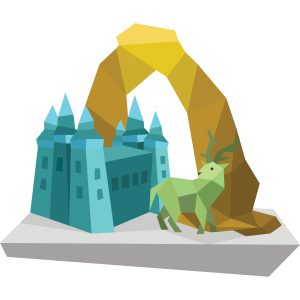
Utah lies where the Great Basin, the Rocky Mountains, and the Colorado Plateau meet. Its national parks, including Zion, Arches, and Bryce Canyon, showcase red rock canyons and natural arches, while the Wasatch Range offers skiing near Salt Lake City. At Promontory Summit, a golden spike marked the completion of the first transcontinental railroad, not far from the Great Salt Lake.
- Capital:
- Salt Lake City
- Nickname:
- The Beehive State
- Statehood:
- January 4, 1896
- Census region:
- West
Stands out as
The most Feeling
of the 50 states and D.C. – see the most Feeling U.S. states
Personality twin
The closest match across all five traits.
Also close: Vermont and Minnesota
Twin abroad: Spain
Average personality traits
Out of every 100 test-takers
- 25 Analysts
- 44 Diplomats
- 16 Sentinels
- 15 Explorers
Personality types
- INTJ (Architect): 6.6% of respondents, 12% less common than in the U.S. as a whole
- INTP (Logician): 6.4% of respondents, 9% less common than in the U.S. as a whole
- ENTJ (Commander): 7.0% of respondents, 13% less common than in the U.S. as a whole
- ENTP (Debater): 4.8% of respondents, 5% less common than in the U.S. as a whole
- INFJ (Advocate): 7.6% of respondents, about as common as in the U.S. as a whole
- INFP (Mediator): 12.2% of respondents, 5% more common than in the U.S. as a whole
- ENFJ (Protagonist): 11.2% of respondents, 7% more common than in the U.S. as a whole
- ENFP (Campaigner): 12.9% of respondents, 15% more common than in the U.S. as a whole
- ISTJ (Logistician): 3.6% of respondents, 17% less common than in the U.S. as a whole
- ISFJ (Defender): 4.7% of respondents, about as common as in the U.S. as a whole
- ESTJ (Executive): 2.5% of respondents, 9% less common than in the U.S. as a whole
- ESFJ (Consul): 4.9% of respondents, 21% more common than in the U.S. as a whole
- ISTP (Virtuoso): 2.9% of respondents, 19% less common than in the U.S. as a whole
- ISFP (Adventurer): 6.0% of respondents, about as common as in the U.S. as a whole
- ESTP (Entrepreneur): 1.7% of respondents, 10% less common than in the U.S. as a whole
- ESFP (Entertainer): 4.8% of respondents, 20% more common than in the U.S. as a whole
Share of respondents. Shaded types are clearly more (↑) or less (↓) common than in the U.S. as a whole, in their Role’s color: the deeper the shade, the bigger the difference.
Explore more
Find a state
See the whole country
United States personality profile
Based on 11,109,810 test results. Want to use this data for research, or have a suggestion? Get in touch.