

Tennessee Personality Profile
- Population (est.):
- 7,315,076
- Test results:
- 171,669
Personality snapshot
Close to the national middle on nearly every scale, Tennessee’s test-takers stand out only in small ways – and those lean toward the quieter, more self-questioning side. Diplomats make up about four in ten respondents, though within them outgoing ENFJs (Protagonists) are slightly rarer and quieter INFPs (Mediators) slightly more common than across the U.S. The traits point the same way. Respondents rank 9th in the country for Turbulence, though the gap is slight, and they’re a little more Introverted than the U.S. as a whole. That suggests people who reflect deeply and keep pushing themselves to do better.
About Tennessee
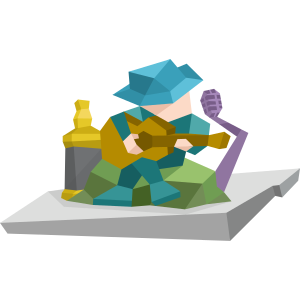
Tennessee stretches from the Great Smoky Mountains in the east to the Mississippi River in the west, and its law recognizes three Grand Divisions: East, Middle, and West Tennessee. The state holds a central place in American music, from country music in Nashville to the blues and rock ’n’ roll of Memphis, home to Graceland. Automotive manufacturing, health care, and tourism are major industries.
- Capital:
- Nashville
- Nickname:
- The Volunteer State
- Statehood:
- June 1, 1796
- Census region:
- South
Stands out as
The 9th most Turbulent
of the 50 states and D.C. – see the most Turbulent U.S. states
Personality twin
The closest match across all five traits.
Also close: Michigan and Oklahoma
Twin abroad: United Kingdom
Average personality traits
Out of every 100 test-takers
- 27 Analysts
- 40 Diplomats
- 17 Sentinels
- 16 Explorers
Personality types
- INTJ (Architect): 7.6% of respondents, about as common as in the U.S. as a whole
- INTP (Logician): 7.2% of respondents, about as common as in the U.S. as a whole
- ENTJ (Commander): 7.5% of respondents, 6% less common than in the U.S. as a whole
- ENTP (Debater): 4.7% of respondents, 7% less common than in the U.S. as a whole
- INFJ (Advocate): 7.7% of respondents, about as common as in the U.S. as a whole
- INFP (Mediator): 12.3% of respondents, 7% more common than in the U.S. as a whole
- ENFJ (Protagonist): 9.6% of respondents, 9% less common than in the U.S. as a whole
- ENFP (Campaigner): 10.9% of respondents, about as common as in the U.S. as a whole
- ISTJ (Logistician): 4.5% of respondents, about as common as in the U.S. as a whole
- ISFJ (Defender): 4.9% of respondents, 5% more common than in the U.S. as a whole
- ESTJ (Executive): 2.9% of respondents, 6% more common than in the U.S. as a whole
- ESFJ (Consul): 4.4% of respondents, 7% more common than in the U.S. as a whole
- ISTP (Virtuoso): 3.5% of respondents, about as common as in the U.S. as a whole
- ISFP (Adventurer): 6.2% of respondents, about as common as in the U.S. as a whole
- ESTP (Entrepreneur): 1.8% of respondents, about as common as in the U.S. as a whole
- ESFP (Entertainer): 4.2% of respondents, 5% more common than in the U.S. as a whole
Share of respondents. Shaded types are clearly more (↑) or less (↓) common than in the U.S. as a whole, in their Role’s color: the deeper the shade, the bigger the difference.
Explore more
Find a state
See the whole country
United States personality profile
Based on 11,109,810 test results. Want to use this data for research, or have a suggestion? Get in touch.