

North Carolina Personality Profile
- Population (est.):
- 11,197,968
- Test results:
- 363,022
Personality snapshot
Close to the U.S. average on nearly every measure, this state’s test-takers make a fair stand-in for the typical American respondent. Just one type stands out, and only slightly: ESFJs (Consuls) are a little more common than nationally. Diplomats are the largest Role, at 41% – almost exactly the national share.
Respondents split almost evenly between Introverts and Extraverts, and between planners and improvisers, but lean clearly Intuitive. They’re also slightly more Turbulent than the country as a whole, so self-doubt and the drive to improve run a little stronger.
About North Carolina
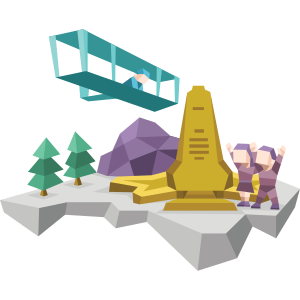
North Carolina reaches from the Blue Ridge and Great Smoky Mountains in the west, across the rolling Piedmont, to the Outer Banks, a chain of barrier islands along the Atlantic. The Wright brothers made the first successful powered airplane flights near Kitty Hawk, and the Research Triangle of Raleigh, Durham, and Chapel Hill is a hub for universities and technology.
- Capital:
- Raleigh
- Nickname:
- The Tar Heel State
- Statehood:
- November 21, 1789
- Census region:
- South
Personality twin
The closest match across all five traits.
Twin abroad: United Kingdom
Average personality traits
Out of every 100 test-takers
- 27 Analysts
- 41 Diplomats
- 16 Sentinels
- 16 Explorers
Personality types
- INTJ (Architect): 7.3% of respondents, about as common as in the U.S. as a whole
- INTP (Logician): 6.8% of respondents, about as common as in the U.S. as a whole
- ENTJ (Commander): 7.7% of respondents, about as common as in the U.S. as a whole
- ENTP (Debater): 4.9% of respondents, about as common as in the U.S. as a whole
- INFJ (Advocate): 7.7% of respondents, about as common as in the U.S. as a whole
- INFP (Mediator): 11.5% of respondents, about as common as in the U.S. as a whole
- ENFJ (Protagonist): 10.8% of respondents, about as common as in the U.S. as a whole
- ENFP (Campaigner): 11.0% of respondents, about as common as in the U.S. as a whole
- ISTJ (Logistician): 4.3% of respondents, about as common as in the U.S. as a whole
- ISFJ (Defender): 4.8% of respondents, about as common as in the U.S. as a whole
- ESTJ (Executive): 2.8% of respondents, about as common as in the U.S. as a whole
- ESFJ (Consul): 4.4% of respondents, 8% more common than in the U.S. as a whole
- ISTP (Virtuoso): 3.6% of respondents, about as common as in the U.S. as a whole
- ISFP (Adventurer): 6.2% of respondents, about as common as in the U.S. as a whole
- ESTP (Entrepreneur): 1.9% of respondents, about as common as in the U.S. as a whole
- ESFP (Entertainer): 4.1% of respondents, about as common as in the U.S. as a whole
Share of respondents. Shaded types are clearly more (↑) or less (↓) common than in the U.S. as a whole, in their Role’s color: the deeper the shade, the bigger the difference.
Explore more
Find a state
See the whole country
United States personality profile
Based on 11,109,810 test results. Want to use this data for research, or have a suggestion? Get in touch.