Core Theory

Assertive vs. Turbulent Personality Traits

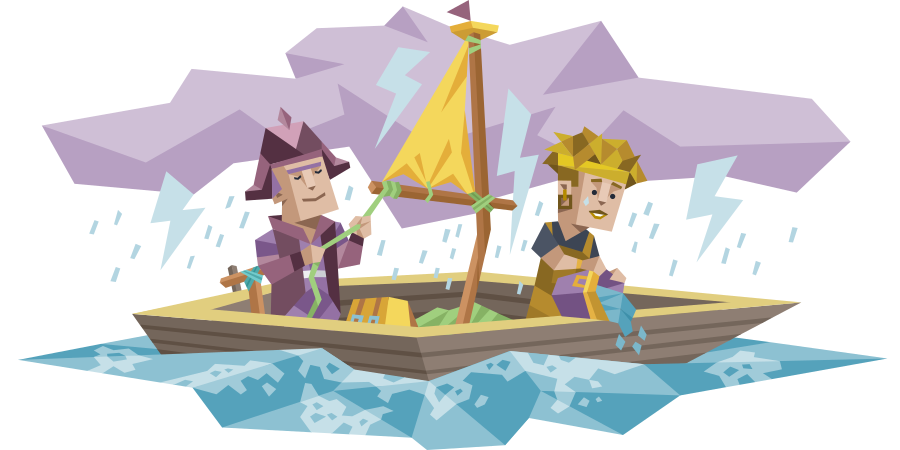
Assertive personality types at ease alongside Turbulent types driven by self-reflection
The Identity scale includes the Assertive (-A) and Turbulent (-T) traits. This aspect of your personality type reveals whether you’re self-assured or self-improving, but it’s not so simple.

Key Takeaways

  • The Assertive vs. Turbulent personality traits broadly reflect how confident we feel and how reactive we are.
  • Assertive individuals tend to be more even-tempered, stress-resistant, and self-assured in their approach to life’s challenges.
  • Turbulent personalities are often perfectionistic, driven by doubt to improve, and sensitive to stress.
  • These traits affect how we respond to success, failure, feedback, and unexpected changes in our lives.
  • Understanding your position on the Identity spectrum can help you manage stress more effectively and develop greater self-awareness.

What Are the Assertive vs. Turbulent Personality Traits?

The Assertive vs. Turbulent personality traits represent important differences in how we respond to life’s constant flow of challenges, opportunities, and changes. Do you meet such events with a steady attitude or intense reactions? Are you comfortable in success or rarely satisfied? Your Identity trait influences not just how you feel about yourself but also how you react to everything around you.

Think of these traits as different approaches to navigating life’s journey. Someone with the Assertive trait might walk a path with even confidence, rarely doubting their direction or abilities even when facing setbacks or criticism. A person with the Turbulent trait might experience the same path with greater emotional intensity, questioning themselves but also using that self-awareness as motivation.

The Identity scale reveals how we handle success and failure, criticism and praise, stability and change. The Assertive and Turbulent traits affect how we process and respond to the external world. Our Identity underpins everything we think and do, including how all our other personality traits are expressed – like different versions of each personality type.

Explore differences between Assertive and Turbulent personality type variants:

Emotional Stability: Key Differences Between the Assertive and Turbulent Personality Traits

The Assertive vs. Turbulent personality traits represent distinct styles of mental and emotional response. If you’re an Assertive personality, your confidence comes from within and isn’t easily swayed by outside influence. You express your beliefs with self-assurance, though stubbornness can sometimes be a downside of that. If you’re a Turbulent personality, you’re more responsive to external influence. You tend to test your beliefs against the world around you, building confidence based on the results even though you face a lot of self-doubt as you go.

These different approaches manifest in several key areas:

Assertive PersonalitiesTurbulent Personalities
Even-tempered and calmEmotionally reactive and sensitive
Resistant to stressProne to stress
Self-confident and assuredSelf-conscious and perfectionistic
Forward-looking, rarely dwell on pastReflective, often dwell on regrets
Relaxed about imperfectionsDriven to improve weaknesses

Stress Response and Self-Confidence: Two Distinct Experiences

Assertive and Turbulent personalities handle stress in different ways. Assertive individuals usually stay emotionally balanced even when facing challenges. They tend to see setbacks as temporary hurdles rather than personal failures. This resilience helps them maintain their confidence through life’s ups and downs.

82% of people with the Turbulent trait say they think a lot about their regrets, compared to 32% of those with the Assertive trait.

“Doubts” survey

Turbulent personalities, however, often have stronger emotional reactions to challenges. They typically worry more about potential problems and feel stress more deeply. Yet this sensitivity helps them notice small issues before they become serious. Their emotional responsiveness, while sometimes uncomfortable, often drives their motivation to improve and achieve.

Both traits represent valid ways to handle life’s pressures. Assertive types generally report being more satisfied with life, while Turbulent types often excel at finding ways to make things better. The difference isn’t about capability but about how these personalities experience and respond to what happens around them.

Are you Assertive or Turbulent?

Take our free personality test to find out!

Take the free test

How Self-Confidence and Stress Resilience Define Assertive Personalities

How Self-Assurance Creates Emotional Stability for Assertive Personalities

People with the Assertive trait approach life with strong self-assurance. They usually keep a relatively steady emotional state under pressure regardless of what is happening around them. This even temper does not mean that they do not care – Assertive personalities still value good outcomes and success, but they rarely let worries or doubts take over their thinking.

For Assertive personalities, confidence serves as protection against life’s inevitable challenges. They trust their abilities and judgment, which helps them make decisions without constant second-guessing. This confidence extends to how they view their past actions, too – they learn from mistakes but do not get stuck on regrets. In their view, what is done is done, and dwelling on the past serves little purpose.

This forward-looking approach creates an emotional stability that helps Assertive types in many situations. However, their confidence can sometimes become overconfidence if they are not careful. They might occasionally overlook real problems or miss important details that could affect their goals.

85% of people with the Assertive trait say they have a healthy ego, compared to 57% of those with the Turbulent trait.

“Ego” survey

Despite these potential drawbacks, the Assertive trait’s core confidence remains a valuable asset. It helps these personalities move forward decisively where others might hesitate or become stuck in doubt.

Being Steady: The Assertive Trait in Career Success and Relationship Dynamics

Assertive personalities bring their natural confidence and stability to all parts of life. In careers, this trait often shows up as a calm, capable approach to challenges. In relationships, Assertive types often provide a stabilizing presence and approach connection with healthy self-esteem and clear boundaries.

92% of people with the Assertive trait say they feel confident facing day-to-day difficulties, compared to 57% of those with the Turbulent trait.

“Handling Stress” survey

Assertive personalities usually approach personal growth with a balanced perspective. While they may not feel a constant urge to perfect every part of themselves, their steady approach can support lasting development over time.

How Perfectionism and Self-Improvement Guide Turbulent Personalities

How Self-Doubt Drives Achievement and Awareness for Turbulent Personalities

People with the Turbulent trait experience life with heightened awareness and sensitivity. This trait makes them very perceptive about themselves and their surroundings – they notice details that others often miss. They are usually very aware of their abilities and limits, which can appear as self-doubt but also drives them to improve.

84% of people with the Turbulent trait say they spend too much time worrying about expectations, compared to 43% of those with the Assertive trait.

“Expectations” survey

For Turbulent personalities, self-doubt can work as a powerful motivator. Their habit of questioning themselves pushes them to work harder, achieve more, and keep developing their skills. They often feel that they need to prove themselves – both to others and to themselves.

Turbulent types also tend to feel emotions more strongly than Assertive people. They may dwell on criticisms or regrets more than is helpful. But this same emotional responsiveness can make them deeply conscientious and attentive to people around them.

84% of people with the Turbulent trait say they worry about how others perceive them, compared to 36% of those with the Assertive trait.

“Being Misunderstood” survey

Managing Anxiety: The Turbulent Trait in Professional Performance and Relationships

Turbulent personalities often bring strong attention to quality in work and relationships. In careers, this can show up as careful execution and strong commitment to improvement. In personal relationships, it can show up as dedication and effort to meet others’ needs.

When Turbulent personalities learn to channel concerns productively instead of being overwhelmed by them, they can convert stress into meaningful progress and long-term growth.

Assertive vs. Turbulent: What Is the Best Personality Trait?

Each trait offers unique strengths that work in different situations. Assertive personalities often shine where emotional stability and confidence matter most. Turbulent personalities often shine where sensitivity, improvement, and attention to detail are essential.

The most effective people, regardless of dominant trait, learn to use both approaches when needed. Assertive personalities can benefit from staying open to feedback and potential blind spots. Turbulent personalities can benefit from stronger self-compassion and resilience.

Ultimately, both perspectives matter. Workplaces, relationships, and communities benefit when Assertive steadiness and Turbulent growth-orientation are both present. Understanding your place on this spectrum is one step toward better self-awareness and more effective choices.


Share this article
Support staff Sentinel icon with a speech bubble.

Discover your personality type

Join over 1 billion people and take our free personality test to learn where you fall on this trait scale. It only takes 10 minutes and it has a 91.2% accuracy rating.

Take the test

Explore all personality types

Comments

Please to join the discussion.

ESFJ avatar
Very true that's me!!
A grayscale avatar for an anonymous user
I'm am so happy to finally be understood! This test is so incredibly accurate it's scary!
A grayscale avatar for an anonymous user
They said that on the front page. Yes, this is so accurate!
INFJ avatar
Very interesting.
INFP avatar
Enlightened by the results!
A grayscale avatar for an anonymous user
Not very prone to stress, but other than that the turbulent traits describe me very well.